


How to Choose the Anchor Artwork That Makes a Gallery Wall Click
- Oct 9, 2025
- 4 min read
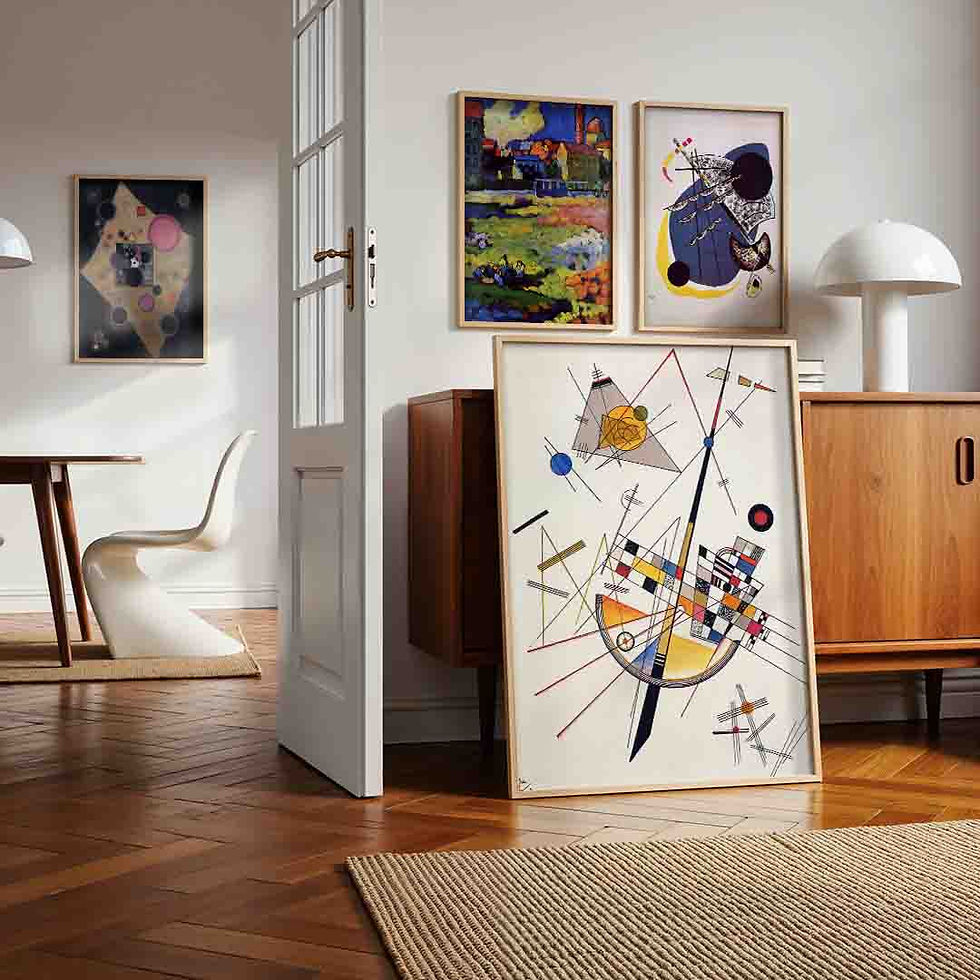
A gallery wall shouldn’t feel like a maths problem. And yet… somehow it often does.
Too many pieces.Too many sizes.Too many opinions.Not enough confidence.
The truth? Most gallery walls don’t fail because of colour, frames, or spacing. They fail because there’s no anchor piece.
Once you understand what an anchor piece is - and how to choose one - the rest of the decisions suddenly feel lighter, clearer, and oddly enjoyable.
Let’s break it down.
What Is an Anchor Artwork?
An anchor piece is the visual centre of gravity in a gallery wall.
It doesn’t have to be:
the biggest piece
the most expensive piece
the most dramatic piece
But it does need to be the piece that everything else quietly agrees to orbit around.
Think of it as:
the sentence your gallery wall is built around
the rhythm the other pieces fall into
the “this is what this wall is about” moment
Once the anchor is chosen, the rest of the wall stops arguing with itself.

Why Gallery Walls Feel So Hard Without One
When people start with multiple pieces at once, they end up:
endlessly rearranging layouts
second-guessing scale
worrying whether things “go together”
abandoning the idea halfway through
That’s because the brain wants hierarchy.
An anchor piece gives your eye somewhere to land - and your decisions somewhere to start.
Without it, every print is shouting.With it, everything else knows when to speak softly.
5 Ways to Choose the Right Anchor Print
1. Choose the Piece That Makes You Feel Something (Not the One That “Matches”)
Your anchor piece should be the artwork you’d keep even if you moved house tomorrow.
Ask yourself:
Which piece would I rescue first if I had to?
Which one still feels right when trends change?
Which one feels like me, not just my décor?
Matching comes later. Meaning comes first.

2. Let Scale Do the Heavy Lifting
Your anchor artwork is usually (not always) one of the largest pieces on the wall.
Why?
Larger pieces naturally command attention
They ground smaller works visually
They make spacing and layout decisions easier
A good rule of thumb: If you removed everything else, the anchor print should still look intentional on its own.
3. Pick the Emotional Tone, Not the Exact Colour Palette
Your anchor sets the mood, not the matchy-matchy rules.
Is it:
playful
dark and dramatic
nostalgic
rebellious
calm and grounding
Once the tone is clear, other pieces can:
echo it
contrast it
soften it
They don’t need to copy it.

4. Decide Where the Wall Begins (Physically)
Anchor pieces often sit:
above a sofa
above a sideboard
at eye level in a hallway
at the centre of a staircase wall
Placing the anchor first answers half your layout questions automatically:
spacing flows outward
balance becomes clearer
awkward gaps disappear
Start with placement, not perfection.
5. Build Outward, Not All at Once
Once the anchor is up:
add one supporting piece at a time
step back after each addition
stop before it feels “finished”
The best gallery walls evolve. They’re allowed to breathe.
What Makes a Bad Anchor Artwork?
It’s rarely about taste - it’s about role.
A poor anchor piece is usually:
too small to lead
emotionally neutral
chosen purely to “tie things together”
something you’re already unsure about
If you’re hesitant before it’s even on the wall, it’s not the anchor. It’s a filler.
The Shortcut: Start With the Anchor, Then Edit Ruthlessly
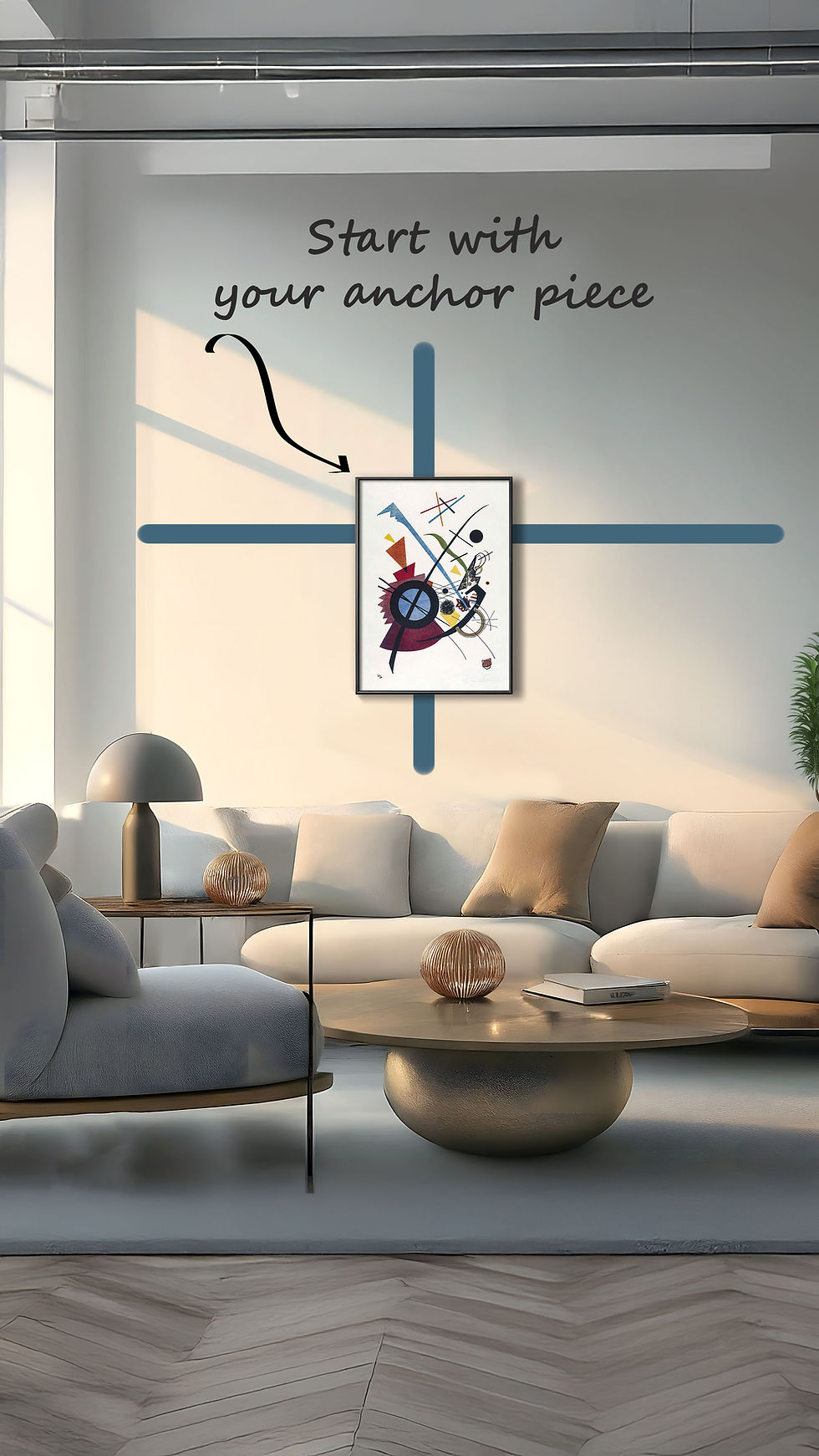
Here’s the quiet secret most stylists won’t say out loud:
A great gallery wall often uses fewer pieces than you think.
Once the anchor is strong:
some pieces become unnecessary
others suddenly feel obvious
negative space starts working for you
Confidence replaces clutter.
If You’re Stuck Right Now…
If your gallery wall feels frozen mid-decision, don’t start again.
Instead:
Identify the piece you wish was the anchor
Temporarily remove everything else
Build back slowly
You’ll know you’ve chosen correctly when the wall starts to feel calm - even unfinished.
Want to Go Deeper?
If you want more information on foolproof layouts for gallery walls, click here.
If you want to skip the planning altogether and buy a ready-curated gallery wall, click here.
If you want more information on choosing art for a gallery wall, click here


